Fender serial numbers from 1950 to 1963 (pre-CBS)
Early Fenders have a plain four- or five-digit serial, no letters. From 1950 to 1954 it is on the bridge plate of Telecasters, Esquires and Precision Basses; from 1954 it is on the neck plate. Approximate ranges: up to 6000 = 1950–1954, 10000s = 1955–1957, 20000s = 1957–1958, 40000s = 1959–1960, 60000s–90000s = 1961–1963.
By Joan Queralt · Checked against Fender’s official dating chart
Decode your 1950s serial
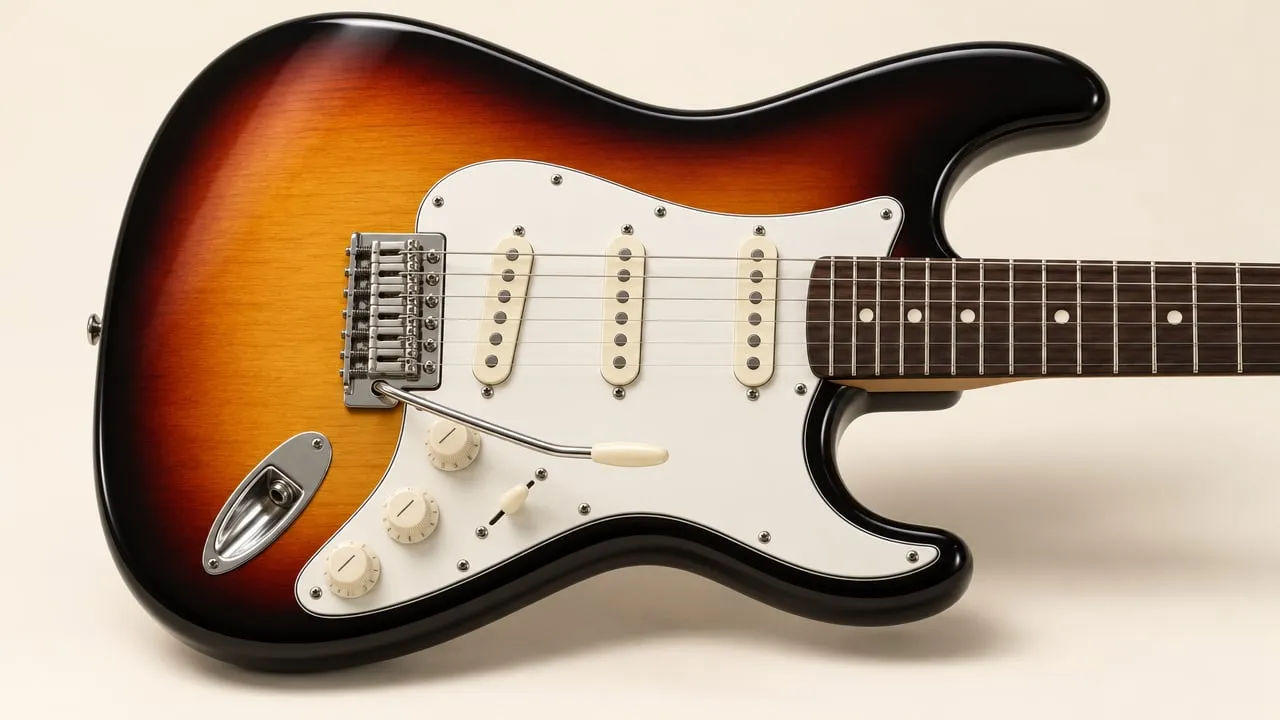
1950s serial number chart
| Number | Years |
|---|---|
| 0001–5999 | 1950–1954 |
| 6000–9999 | 1954–1956 |
| 10000–19999 | 1955–1957 |
| 20000–29999 | 1957–1958 |
| 30000–39999 | 1958–1959 |
| 40000–49999 | 1959–1960 |
| 50000–59999 | 1960–1961 |
| 60000–79999 | 1961–1962 |
| 80000–99999 | 1962–1963 |
Where to find it
Bridge plate (Telecaster, Esquire, Precision Bass, 1950–1954), then the neck plate. Some plates show a dash before the number: ignore it.
Models with this serial
Broadcaster, Nocaster, Esquire, Telecaster, Precision Bass, Stratocaster (from 1954), Duo-Sonic, Musicmaster, Jazzmaster (1958), Jazz Bass (1960), Jaguar (1962).
The serial is the weakest clue on a vintage Fender
Neck plates were taken from a bin, so numbers overlap by a year or two. They are also easy to swap or fake, and a 1950s Fender is worth faking. Collectors date these guitars from the pencil date on the neck heel and in the body, the pot codes, the pickup details and the finish. The serial only has to agree.
Get a professional opinion
For a pre-CBS Fender being bought or insured, a vintage specialist should inspect it in person. Photos of the neck heel, the body routes, the pots and the pickups are the minimum to ask for.