How to spot a fake Fender using the serial number
A serial number can expose a fake Fender, but a correct-looking one proves nothing on its own. The serial checks, and the physical checks that go with them.
A serial number can expose a fake Fender, but it cannot prove a guitar is real. Counterfeiters copy genuine serials, so a number that decodes correctly is only the first check. What catches most fakes is a mismatch: a serial format that does not fit the country, the year or the features of the guitar it is on.
Key points
- A serial that doesn’t decode or contradicts the “Made in” text is a red flag.
- A serial that does decode must still agree with the model, the neck date and the parts.
- Check the logo, decal, neck plate, tuners, electronics and cavities.
- If the price is far below the market for that model and year, assume it is a fake until proven otherwise.
Serial number red flags
| What you see | Why it’s suspicious |
|---|---|
| The serial doesn’t match any known format | Fender formats are consistent; random strings are a classic fake sign |
| “Made in USA” with an MX, MZ or Squier factory code | The country and the serial disagree |
| A US + year serial for a year before 2010 | The US format only started in 2010 |
| A modern headstock decal on a “1960s” guitar | Before 1976 the serial was on the neck plate |
| An L-series or 1950s plate with modern features | Plates are easy to stamp and swap |
| The same serial on several listings | Counterfeiters reuse one real number |
Type the serial into the decoder below and check whether the country and the years it gives match what the seller says.
Checking a guitar before you buy?Decode the serial and compare the country and year with the listing.
Open the decoderPhysical checks that go with the serial
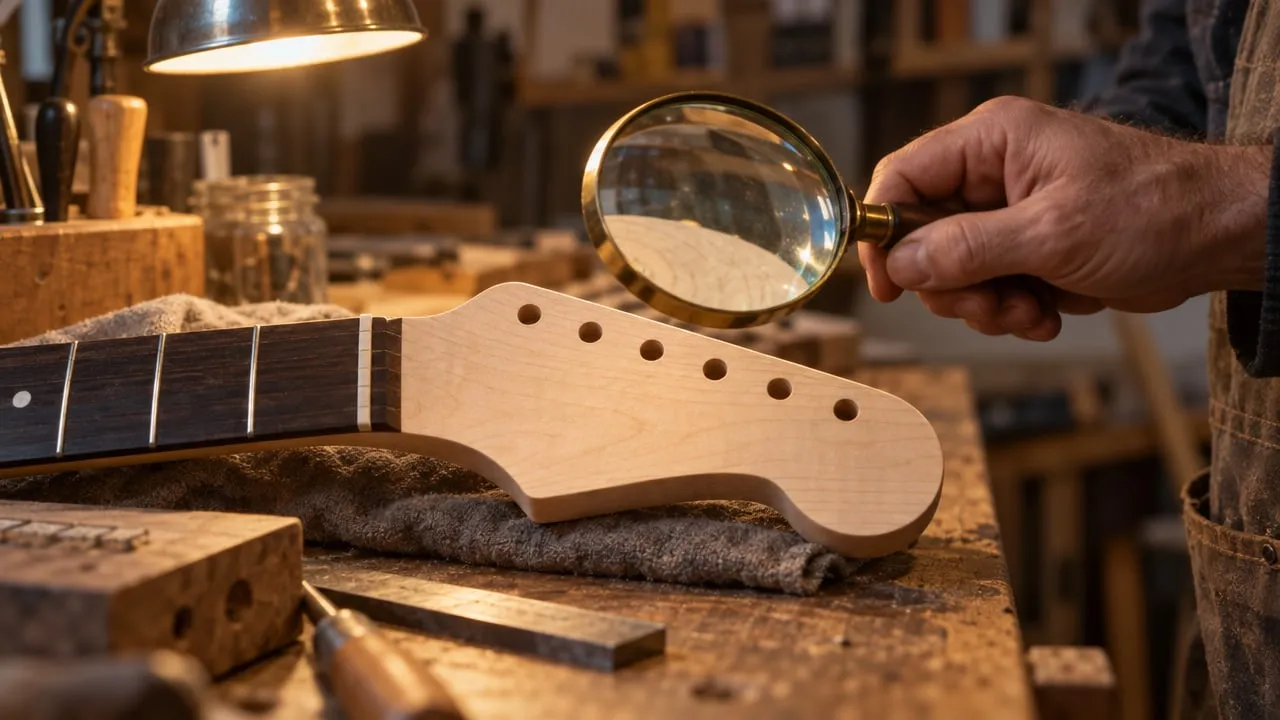
- Headstock logo. Genuine logos are crisp and sit under the finish. Fuzzy edges, the wrong font or a logo you can feel on top of the finish are warnings.
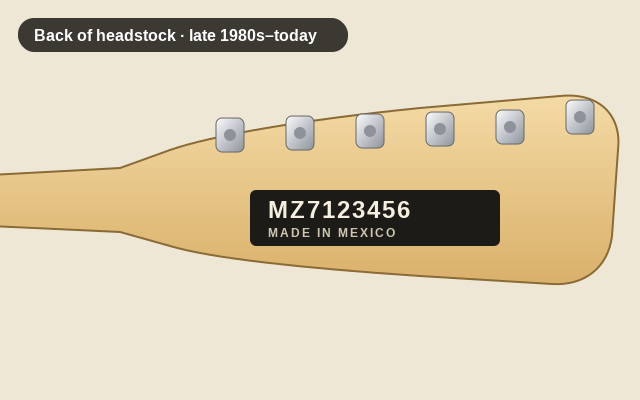
- Serial decal. On modern Fenders it is under the clear coat on the back of the headstock, aligned and evenly printed.
- Neck plate. Stamped numbers should be evenly spaced and deep. Engraved, laser-etched or crooked numbers are suspect on a vintage-style plate.
- Tuners and hardware. Fender uses branded tuners (often with the Fender name on the back) and solid bridges; very light, unbranded hardware is a warning.
- Electronics. Real Fenders use full-size pots with manufacturer and date codes (CTS 137 is common), proper wiring and clean solder joints.
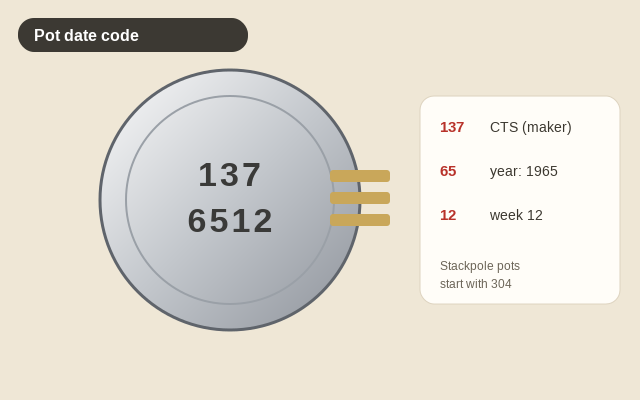
- Cavities and neck pocket. Factory routing is clean, and many Fenders have stamps or dates in the neck pocket and under the pickguard.
- Weight and feel. Fakes often use cheap laminated or very light wood, and the neck finish feels different.
When the serial is right but something feels off
A real serial on the wrong guitar is the most common situation with good fakes. Ask the seller for:
- photos of the neck heel (date and stamps),
- the neck pocket and pickup cavities,
- the pots with their codes visible,
- the receipt, case paperwork or certificate (Custom Shop guitars come with one).
You can also try Fender’s official serial lookup, which recognises many recent instruments, though not all.
Vintage and Custom Shop guitars
For pre-CBS Fenders, early CBS guitars and Custom Shop models, the money involved justifies an in-person inspection by a vintage specialist before you pay.