Can you find a Fender’s value by its serial number?
A serial number gives your Fender’s year and country, two of the biggest price factors. It does not give the value. Here is how to go from serial to a realistic price.
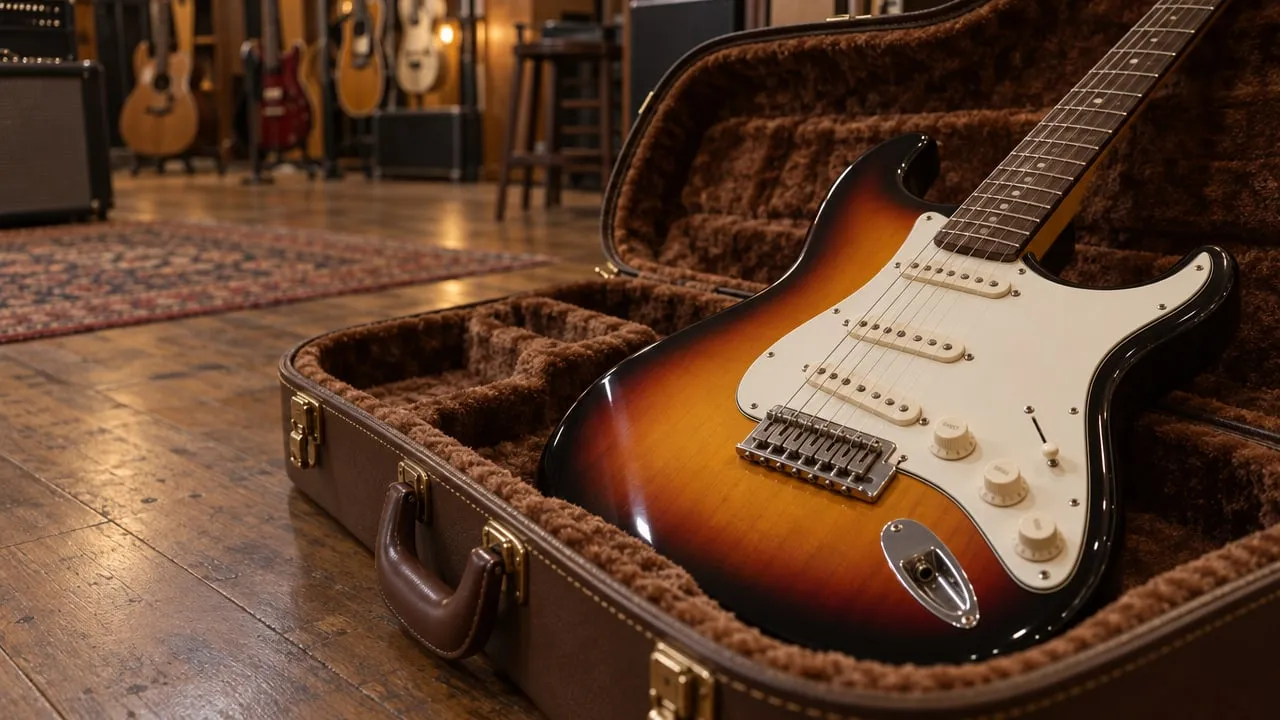
No: a serial number cannot tell you what a Fender is worth. It tells you when and where the guitar was made, and those are two of the biggest factors in its price. To get from the serial to a realistic value, you also need the exact model, how original it is, its condition, and what the same guitar has actually sold for recently.
Key points
- The serial gives the year and the country. Decode it first.
- The model (Standard, Player, American Professional, Custom Shop…) matters as much as the year.
- Originality (matching neck, body, pickups, pots, finish) can double or halve a vintage price.
- The real value is what identical guitars sold for recently, not asking prices.
What the serial does tell you
| From the serial | Why it matters for price |
|---|---|
| Country (USA, Mexico, Japan, Squier factory) | American guitars sell for more than Mexican ones of the same model; early Japanese JV guitars are collectible |
| Era (pre-CBS, CBS, post-CBS, modern) | Pre-CBS guitars (before 1965) are in a different league; 1970s guitars sit between vintage and modern |
| Year | Anniversaries, first years of a model and short-lived series can carry a premium |
| Factory line (Custom Shop, American Vintage) | Custom Shop CZ and R serials and V-serial reissues price above standard production |
What it doesn’t tell you
- The model. A 2018 Mexican serial can be a Standard or a Player; an American Z serial can be an American Series or an American Deluxe.
- Originality. The serial is on the neck. The body, pickups, pots and finish may be from other guitars.
- Condition. Fret wear, finish damage, refinishes and repairs all move the price.
- The market. Prices for the same model move with fashion and demand.
Start with the year and the countryDecode your serial first: it’s the one fact every buyer will check.
Open the decoderHow to estimate a realistic price
- Decode the serial to get the year range and country.
- Identify the exact model. The headstock logo, pickups, bridge and the 10-digit model number on the box or receipt settle it.
- Check originality. Compare the neck date and the pot codes with the serial, and look for replaced parts (see the dating guide).
- Grade the condition honestly: mint, excellent, very good, good, fair.
- Look up sold prices, not asking prices, for the same model, year range and condition. Marketplaces such as Reverb publish price guides built from completed sales.
- For vintage or Custom Shop guitars, ask a vintage specialist for an appraisal, especially for insurance.
The serials collectors look for
| Serial | Era | Why |
|---|---|---|
| 4–5 digits | 1950–1963 | Pre-CBS, the most valuable Fenders |
| L + 5 digits | 1963–1965 | Late pre-CBS |
| 6 digits, F plate | 1965–1976 | Early CBS guitars especially |
| V (early) | 1982–1984 | Fullerton-made vintage reissues |
| JV | 1982–1984 | First Fender Japan and Squier reissues |
| CZ, R | 1990s–today | Custom Shop, especially Masterbuilt |
Valuable serials attract fakes
Neck plates can be stamped and decals reprinted. On any guitar priced as vintage, the serial is the start of the checks, not the end. Read how to spot a fake Fender.