Fender “S” serial numbers (1976–1981)
In 1976 Fender moved the serial from the neck plate to a decal on the headstock and added a decade letter. S stands for the seventies: S6 = 1976, S7 and S8 = 1977–1978, S9 = 1978–1981. Some 1976 guitars use seven digits starting with 76 instead.
By Joan Queralt · Checked against Fender’s official dating chart
Decode your S serial
S serial number chart
| Prefix | Years |
|---|---|
| 76 + 5 digits | 1976 |
| S6 | 1976–1977 |
| S7 | 1977–1978 |
| S8 | 1977–1978 |
| S9 | 1978–1981 |
Where to find it
A decal on the front of the headstock, near the logo and the patent numbers.
Models with this serial
Late-CBS Stratocasters, Telecasters, Precision and Jazz Basses, plus the Mustang, Musicmaster and Bronco student models of the time.
Features that go with an S serial
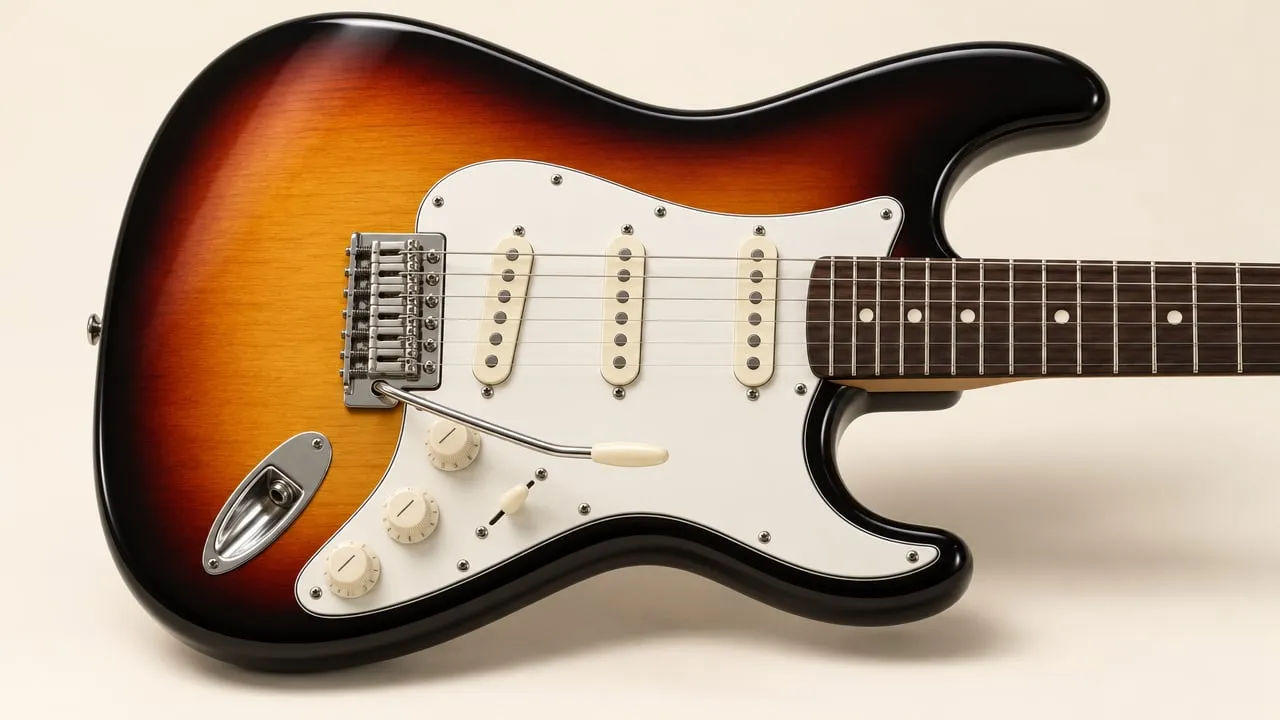
Stratocasters of this era have a three-bolt neck with a tilt adjustment and a “bullet” truss rod nut at the headstock. Both were used from 1971 to 1981. A four-bolt neck on a guitar with an S serial means the neck or the body has been replaced.
Japanese and Korean S serials
S plus six digits was also used by Fender Japan (1994–1995 and again 2006–2008), and Samick-made Korean Squiers used S9 and S1. A late-70s American Fender says “Made in USA” on the headstock decal.
What Fender’s own chart says about S serials
Fender’s dating page for American instruments explains that the S prefix was a CBS attempt to use the serial number to show the production decade, and that an E prefix followed in 1979 for the 1980s. The same page shows how loose the system was: S7 and S8 serials both turn up on guitars from 1977 and 1978, and S9 serials were still being fitted alongside E0 and E1 in 1980 and 1981.
That is why the decoder gives S8 as 1977–1978 rather than a single year. Necks were made in batches and numbered before assembly, so a decal applied one year could end up on a guitar finished the next.
Why 1970s Fenders are harder to date
On most American Fenders the butt end of the neck heel carries a pencilled or stamped date, the best way to narrow down the year. Fender notes that this was not done consistently between 1973 and 1981, so many S-serial guitars have no neck date at all, or only a partial one.
When the neck date is missing, combine the serial range with the pot codes, the hardware and the features listed above. If you want to look under the neck yourself, slacken the strings before removing the neck screws; Fender suggests asking an experienced guitar tech if you are not comfortable doing it.