Telecaster serial number lookup
The Telecaster is Fender’s oldest solid-body, and the only one whose earliest serials are on the bridge. Here is where to look on a Tele from every decade.
By Joan Queralt · Updated
Decode your serial
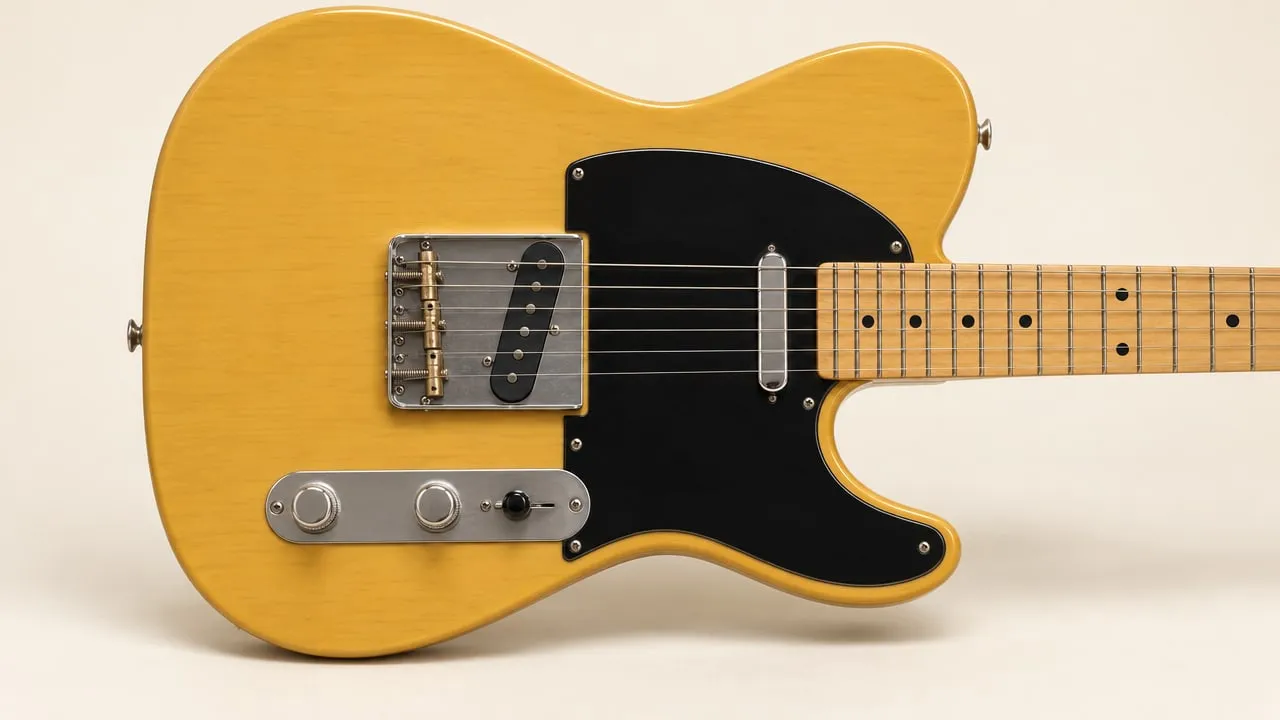
Where the serial is on a Telecaster
| Years | Location | Format |
|---|---|---|
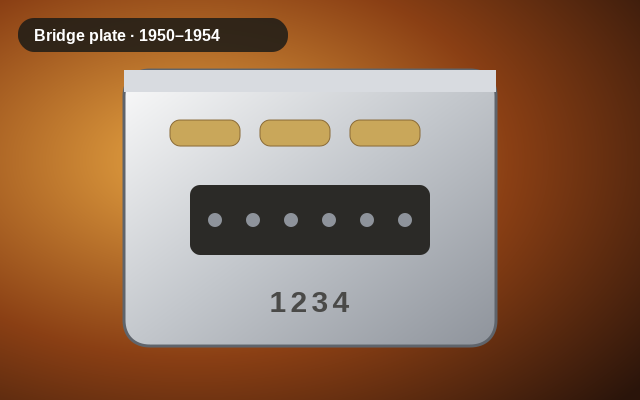
| 1950–1954 | Bridge plate | 4 digits |
| 1954–1963 | Neck plate | 4–5 digits |
| 1963–1965 | Neck plate | L + 5 digits |
| 1965–1976 | Neck plate with “F” | 6 digits |
| 1976–late 1980s | Front of headstock | S, then E + digits |
| late 1980s–today | Back of headstock | N, Z, US + year (USA); MN, MZ, MX + year (Mexico) |
| 1982–today (reissues) | Neck plate or headstock | V, R, JV or period-style |
Broadcaster, Nocaster, Telecaster
Fender’s first single-pickup guitar was the Esquire (1950). The two-pickup version was called the Broadcaster until Gretsch objected to the name in early 1951. For a few months Fender clipped the word off the decals, creating the “Nocaster”, and then renamed the guitar the Telecaster. All three use bridge plate serials, and all three are prime targets for fakes, so a serial alone never authenticates one. The Esquire carried on as the single-pickup model until 1969; if you are not sure which of the two you have, see how to tell an Esquire from a Telecaster.
Telecaster features by era
| Era | Clues |
|---|---|
| 1950–1954 | Serial on the bridge plate, “ashtray” bridge with three brass saddles, black pickguard |
| 1954–1958 | White pickguard, serial on the neck plate |
| 1958–1960 | “Top-loader” bridge (strings through the bridge, not the body) on many guitars |
| 1959 onwards | Rosewood board option, slab then veneer |
| 1968–1981 | Large black logo; Thinline, Custom and Deluxe variants |
| 1990s–today | American Standard / Professional (USA) and Standard / Player (Mexico) |
Dating a Telecaster step by step
The serial gives a range of one to three years. Fender’s dating page explains why: production was modular, so a neck or a bridge plate could be stamped well before the guitar was assembled. To get closer to the real date:
- Read the serial where it is. On early Telecasters Fender stamped it on the bridge plate, between the pickup and the saddles; from 1954 it moved to the neck plate, and from 1976 to a decal on the headstock.
- Check the neck heel. Most American necks carry a pencilled or stamped date on the butt end of the heel. Fender says this was not done consistently between 1973 and 1981, so a 1970s Tele may have none.
- Check the body and the pots. The neck pocket, the control cavity and the pot codes usually agree with the neck within a few months.
- Check the features. Use the era table above: a top-loader bridge on a 1970s serial, or a black pickguard on a late-1950s neck, means something has been changed.
Telecaster reissues and their serials
Vintage-style Telecasters are where most dating mistakes happen. Fender’s chart says the American Vintage ’52 Telecaster uses a five-digit number stamped into the bridge plate, like the originals, instead of the V serial used on the other American Vintage models. A five-digit bridge plate number on a guitar with modern features is therefore not a 1950s Telecaster.
Japanese reissues use JV, a letter plus six digits or JD plus the year, and Mexican reissues use MN, MZ or MX. A few Mexican artist Telecasters, such as the James Burton Standard and the Jim Root models, use an MSN prefix according to Fender’s Mexico chart.
Telecaster serial examples
- MX19123456: Mexico, 2019.
- Z7123456: USA, 2007–2008.
- 1234 on the bridge plate: 1950–1954; check the neck date.