Where is the serial number on a Fender guitar or bass?
Since 1976 most Fenders have the serial on a headstock decal; before that, on the neck plate, and on early Teles and P-Basses, the bridge plate. Where to look.
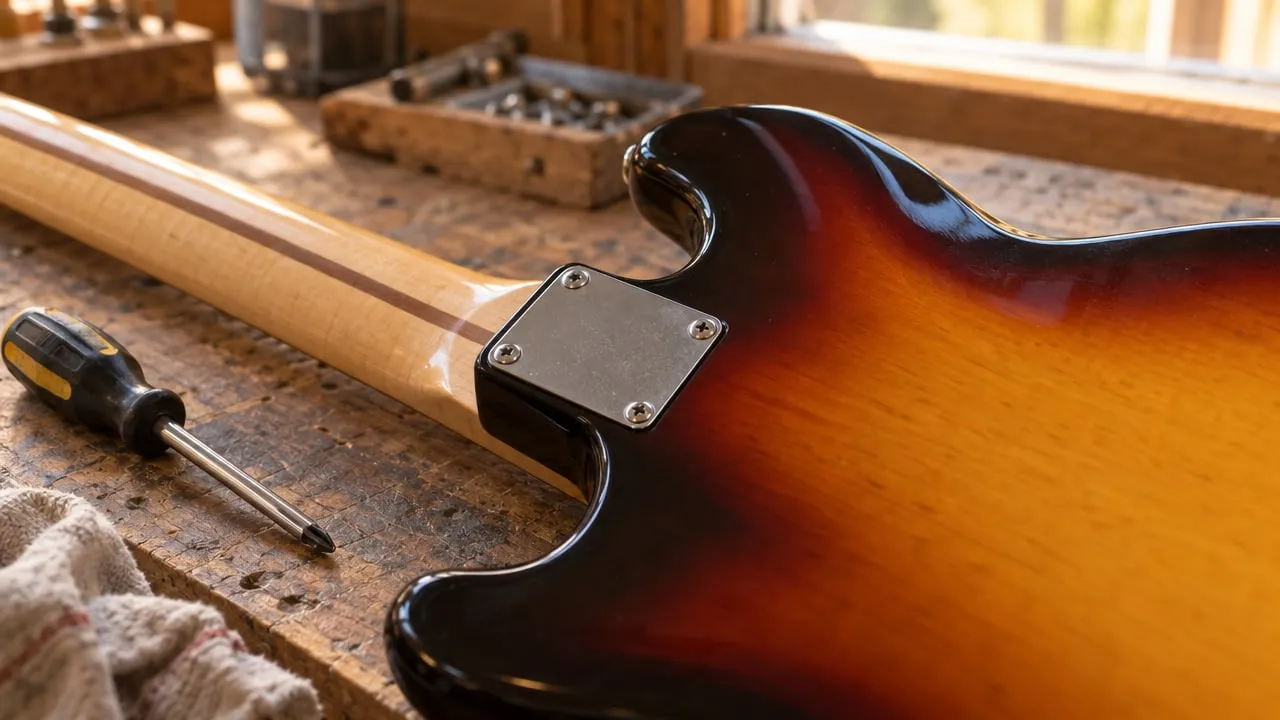
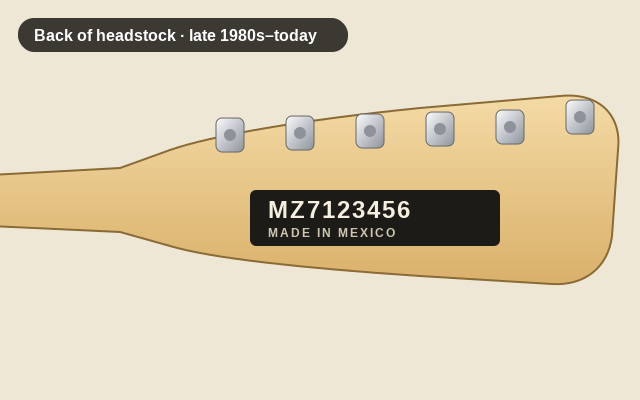
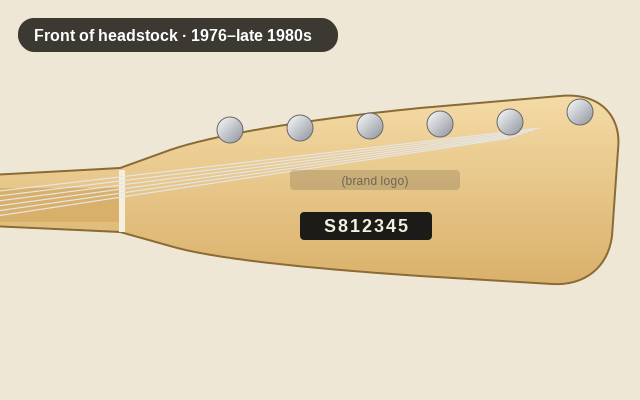
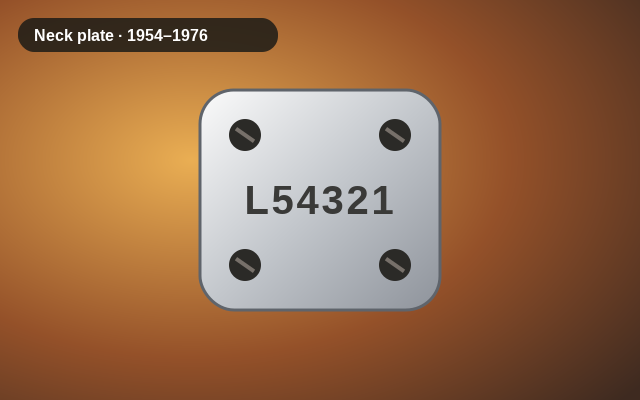
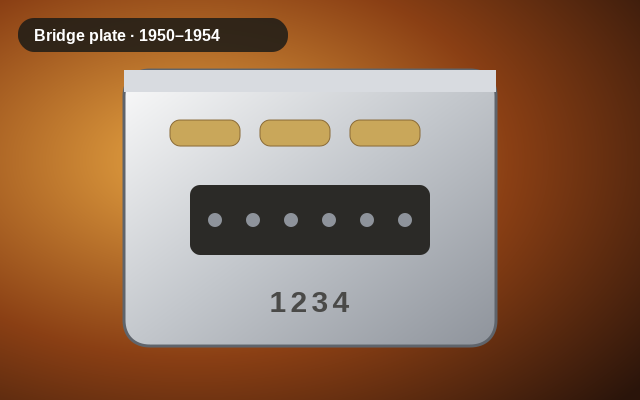
On most Fenders made since 1976 the serial number is a decal on the headstock: on the front until the late 1980s, on the back since then. On guitars from 1954 to 1976 it is stamped on the neck plate, the metal plate where the neck is screwed to the body. On the very first Telecasters, Esquires and Precision Basses (1950–1954) it is on the bridge plate.
Key points
- Back of the headstock: almost every Fender and Squier made since the late 1980s.
- Front of the headstock: American Fenders from 1976 to the late 1980s.
- Neck plate: 1954–1976, plus vintage reissues and Custom Shop Relics.
- Bridge plate: 1950–1954 Telecasters, Esquires and Precision Basses.
The five places Fender has put the serial
| Location | Years | Typical format | What it looks like |
|---|---|---|---|
| Back of headstock | late 1980s–today | US21012345, MX19123456, ICS12345678 | Black or gold decal, often with “Made in…” |
| Front of headstock | 1976–late 1980s | S812345, E412345 | Small decal near the logo or the patent numbers |
| Neck plate | 1954–1976 | 34567, L54321, 512345 | Numbers stamped into the metal |
| Bridge plate | 1950–1954 | 1234 | Numbers stamped into the bridge base |
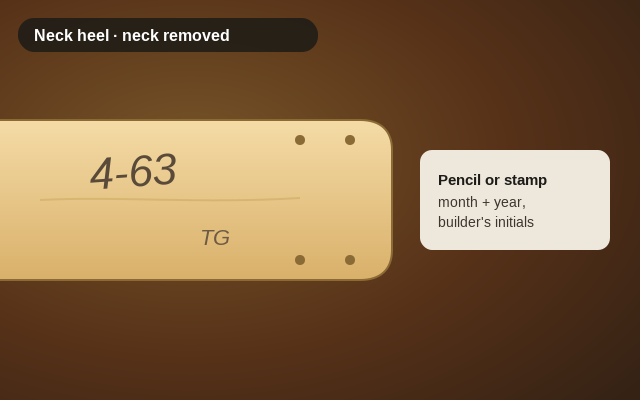
| Neck heel | 1980s Japan | letter + digits | Only visible with the neck removed |
How to find it, step by step
- Look at the back of the headstock, just below the tuners. If you see “Made in USA / Mexico / Japan / Indonesia / China” there is almost always a serial next to it.
- Look at the front of the headstock near the logo. On a 1970s or 1980s American Fender, the serial is a small decal there.
- Turn the guitar over and look at the neck plate. If the plate has a number stamped on it, that is the serial on anything older than 1976, and on vintage reissues.
- On an early Telecaster or Precision Bass, check the bridge plate.
- Still nothing? The decal may have worn off, the neck may be a replacement, or the guitar may have been refinished. The neck heel may have a date or a code; see the dating guide. And if you found a number but no lookup recognises it, see what “serial number not found” means.
Two numbers on one guitar?
Some reissues have both a serial on the neck plate and a decal on the headstock, and Custom Shop guitars come with a certificate that repeats the serial. If two numbers on the same guitar disagree, one part has probably been replaced.
Model by model
- Stratocaster: neck plate until 1976 (three bolts from 1971), then the headstock. Strat serial guide.
- Telecaster: bridge plate 1950–1954, neck plate until 1976, then the headstock. Tele serial guide.
- Precision and Jazz Bass: same pattern as the guitars. Bass serial guide.
- Squier: back of the headstock on nearly all models; early Japanese JV and SQ Squiers on the neck plate. Squier serial guide. On a Classic Vibe, the decal behind the tuners also gives you the year: see how to read a Squier Classic Vibe serial.
What the serial tells you once you find it
The letters at the start give you the country and the decade; on modern guitars the next two digits are the year. A Mexican Fender starting with MX19 was made in 2019; an American one starting with Z5, in 2005–2006. Type yours into the decoder below to get the full answer and the chart behind it.
What the serial does not tell you
It identifies the neck, not the whole guitar. Bodies, pickups and electronics can all have been changed. For a guitar you are buying, the serial should agree with the neck date, the pots and the features of that year. Our guide to spotting a fake Fender lists what to check.