Stratocaster serial number lookup
The Stratocaster has been in production since 1954 in the USA, Mexico, Japan and, as a Squier, across Asia. Here is where its serial sits in each era and the features that confirm the year.
By Joan Queralt · Updated
Decode your serial
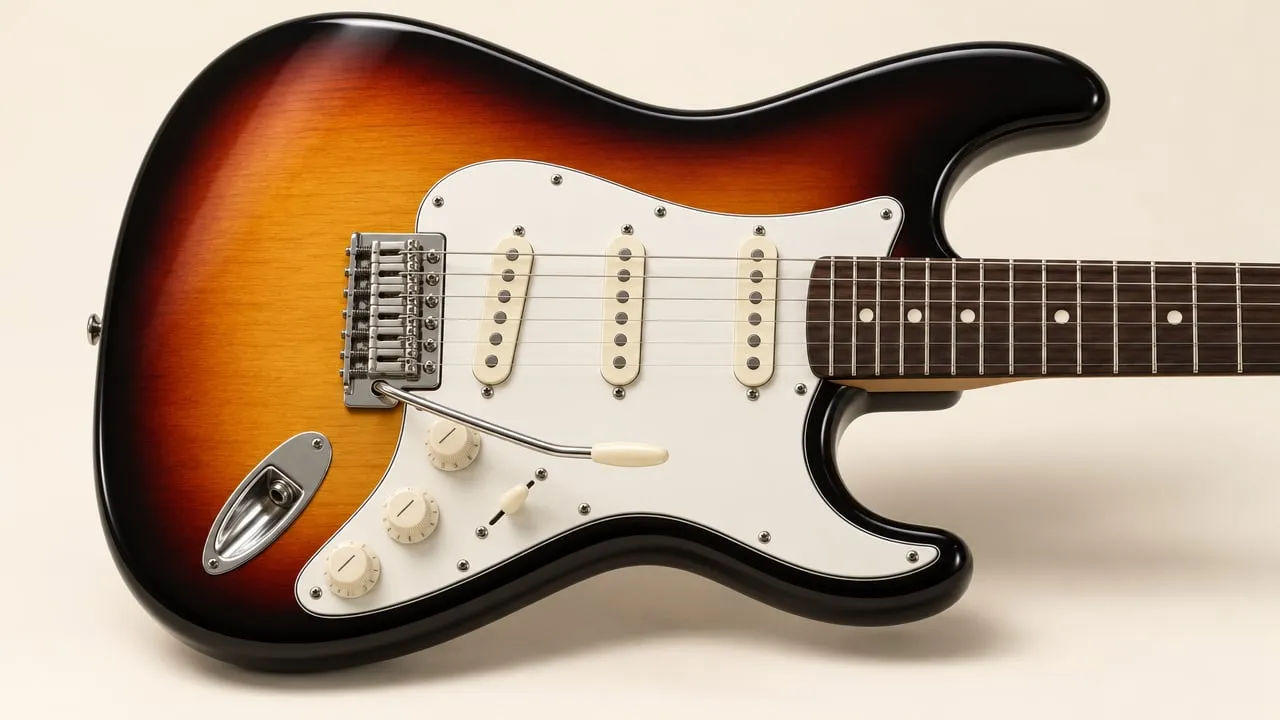
Where the serial is on a Stratocaster
| Years | Location | Serial format |
|---|---|---|
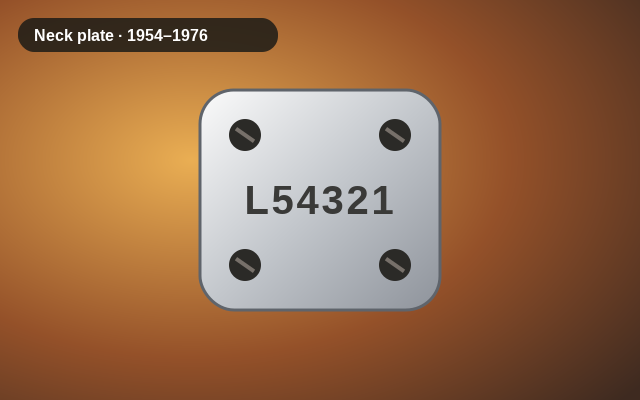
| 1954–1963 | Neck plate (four bolts); on the earliest Strats, the back vibrato cover plate | 4–5 digits |
| 1963–1965 | Neck plate | L + 5 digits |
| 1965–1971 | Neck plate with large “F” | 6 digits |
| 1971–1976 | Three-bolt neck plate with “F” | 6 digits |
| 1976–1981 | Front of headstock, three-bolt neck | 76 or S + digits |
| 1981–late 1980s | Front of headstock, four-bolt neck | E + digits |
| late 1980s–today (USA) | Back of headstock | N, Z, then US + year |
| 1990–today (Mexico) | Back of headstock | MN, MZ, then MX + year |
| 1982–today (reissues) | Neck plate | V, R or a period-style number |
Strat features by era
The serial has to agree with the guitar. These features are the quickest cross-check:
| Era | Headstock | Neck | Other clues |
|---|---|---|---|
| 1954–1959 | Small, gold “spaghetti” logo | One-piece maple | Two-tone sunburst, ash body to 1956 |
| 1959–1962 | Small | Slab rosewood board | Three-tone sunburst |
| 1962–1965 | Small, transition logo from 1964 | Curved (veneer) rosewood | Clay dot markers |
| 1966–1971 | Large headstock | Four-bolt | Black logo from late 1960s |
| 1971–1981 | Large | Three-bolt, tilt adjustment, “bullet” truss rod | Heavier ash bodies common |
| 1981–1983 | Small again | Four-bolt | “Dan Smith” Standard Strat |
| 1987 onwards | Small | Four-bolt | American Standard, two-point tremolo |
A three-bolt neck with an E serial, or a large headstock on a guitar with an L-series plate, means parts have been swapped.
Stratocaster serial examples
- MZ5123456: Made in Mexico, 2005–2006.
- US21012345: Made in Corona, USA, 2021.
- S812345: USA, 1977–1978, three-bolt neck expected.
- E412345: USA, 1984–1988 (or Japan 1984–1987: check the headstock).
How to date a Strat when the serial is not enough
Fender’s own advice is that a serial number gives a range, not a date, because necks and bodies were made in batches and numbers were not always used in order. To narrow it down, check these in order:
- The neck heel. On most American Fenders the butt end of the neck carries a pencilled or stamped production date. Slacken the strings, remove the neck screws and lift the neck out of the pocket. Fender notes this date was not applied consistently from 1973 to 1981, and it suggests asking an experienced guitar tech if you are not comfortable doing it.
- The body. The neck pocket and the cavity under the pickguard often carry a date or a code too.
- The pots. The code on each potentiometer gives the year and week it was made; here is how to read Fender pot codes.
- The features. The table above lists the headstock, neck and hardware details that should match the period.
The neck date tells you when the neck was made, not when the guitar was finished. A difference of a few months between the neck, the body and the pots is normal; a difference of several years usually means parts have been swapped.
Strat serials that do not fit the table
- American Vintage reissues carry a V serial on the neck plate, which does not encode the year.
- Japanese Strats use JV, a letter plus six digits, or JD plus the year; see the Fender Japan chart.
- Squier Strats start with a factory code such as CY, ICS or CGS; see the Squier serial guide.
- Custom Shop Strats use CZ or R serials and are dated from their paperwork; see Custom Shop serial numbers.
- Some Mexican artist Strats, such as the Jimmie Vaughan, Robert Cray and Buddy Guy models, use an MSN prefix, according to Fender’s Mexico chart.
Thinking of selling or buying a Strat?The year is only one part of the price. Read what really sets the value of a Fender.
Value guide