Is my Fender Mexican or American?
Check the “Made in” text, the first letters of the serial (MN, MZ, MX for Mexico; N, Z, US for the USA), the series name and the neck and body. Five quick checks.
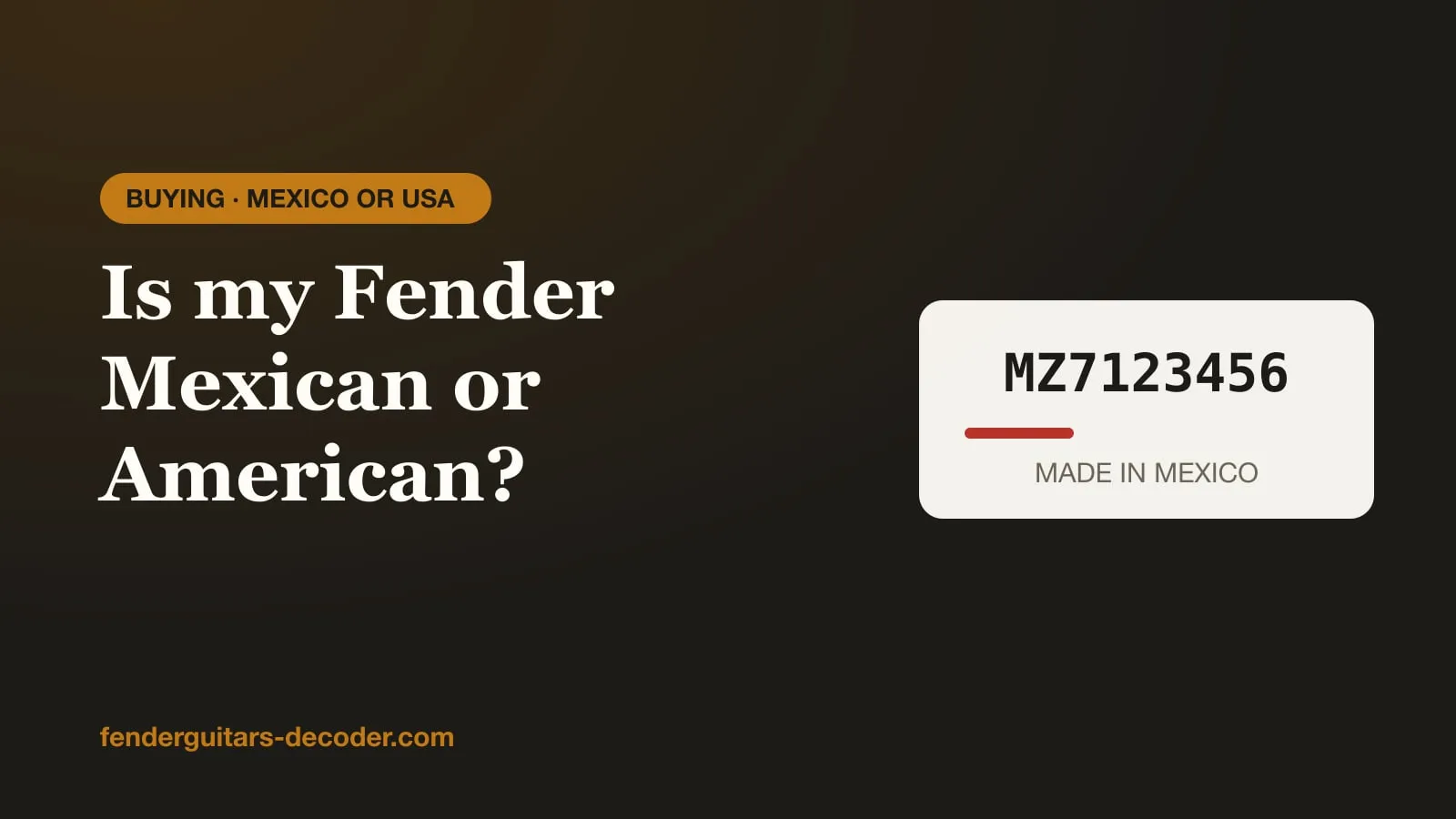
Look at the back of the headstock. A Mexican Fender says “Made in Mexico” and its serial starts with MN, MZ or MX; an American one says “Made in USA” and its serial starts with US, Z, N or E (or, on older and vintage-style guitars, is stamped on the neck plate). If the text and the serial agree, you have your answer; if they don’t, or a part has been changed, the three checks further down settle it.
Key points
- MN, MZ, MX = Fender Mexico (Ensenada). US, Z, N, E, S = Fender USA (Corona, or Fullerton before 1985).
- The “Made in” text sits next to the serial decal on modern Fenders.
- The series name helps: Player and Vintera are Mexican; American Professional, American Ultra and American Vintage are made in the USA.
- The serial is on the neck. A swapped neck can make a Mexican guitar look American, or the other way round.
Why it matters which factory built it
Both are real Fenders. Fender owns and runs the factory in Ensenada, Baja California, which opened in 1987 a few hours’ drive from its American plant in Corona, California. Mexican models are Fender’s mid-priced range, between Squier and the American series. That difference in price is exactly why the question comes up: a guitar sold as American should be American, and a Mexican one sold at an American price is a bad deal even if every part is genuine.
1. Read the “Made in” text
On almost every Fender made since the late 1980s, the serial is a decal on the back of the headstock, with the country of manufacture printed next to it. Read it first: “Made in Mexico” or “Made in USA” is the quickest answer you will get.
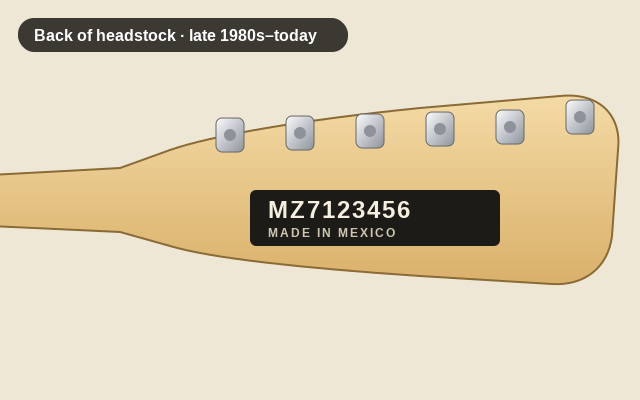
There are two exceptions. American Fenders from 1976 to the late 1980s have the serial on the front of the headstock, and vintage-style American guitars (pre-1976 originals, American Vintage reissues) have it stamped on the neck plate. Our guide to where the serial number is on a Fender shows all five locations.
2. Decode the first letters of the serial
The prefix is the most reliable clue, because Fender uses different formats for each factory. The decal can wear off, but if any of it is left, the first two characters usually are.
| Serial starts with | Country | Years | Example |
|---|---|---|---|
| MN + 1 digit | Mexico | 1990–2000 | MN8123456 = 1998 |
| MZ + 1 digit | Mexico | 2000–2010 | MZ7123456 = 2007 |
| MX + 2 digits | Mexico | 2010–today | MX21012345 = 2021 |
| US + 2 digits | USA | 2010–today | US21012345 = 2021 |
| Z or DZ + 1 digit | USA | 2000–2010 | Z5123456 = 2005–2006 |
| N or DN + 1 digit | USA | 1989–2000 | N3123456 = 1993–1994 |
| E + 1 digit | USA | 1979–1990 | E412345 = 1984–1988 |
| S + 1 digit, or 76 | USA | 1976–1981 | S812345 = 1977–1978 |
| V, L or digits on the neck plate | USA | 1950s–today | L54321 = 1964–1965 |
The M is always for Mexico: N for the nineties, Z for the 2000s and X since 2010. American serials never start with M, and Mexican serials never start with US. Serials that start with something else entirely (JD, JV, CY, ICS, KC…) are neither: they come from Japan or from a Squier factory in Asia. See Fender Japan and Squier serial numbers.
Not sure how to read yours?Type the serial and get the country, the factory and the year in one go.
Open the decoder3. Check the series name
The serial gives the country and the year, not the model. The series name, printed on the headstock of many recent models and always on the box, the receipt and the warranty card, is a good second check. Most Fender series are built in only one country:
| Made in Mexico | Made in the USA |
|---|---|
| Standard (1991–2018) | American Standard, American Series |
| Player and Player II (2018–today) | American Professional and Professional II |
| Classic Series (1999–2019) | American Ultra and Ultra II |
| Vintera and Vintera II (2019–today) | American Vintage and American Vintage II |
| Road Worn, Classic Player, Deluxe | American Deluxe, American Elite, American Performer |
Watch out for the similar names. “Deluxe” on its own is a Mexican line, but “American Deluxe” was made in Corona (its serial starts with DN or DZ). The Mexican Classic Series reissues and the American Vintage reissues both copy 1950s and 1960s guitars, but only the American ones have a V or US serial.
4. Use Fender’s own lookup and the paperwork
Fender’s official serial lookup returns the model, and with it the series, for many instruments made in recent years. It does not cover every guitar, so a “not found” result is not a verdict on its own (see why a Fender serial can come back as not found).
The box, the receipt, the hang tag and the warranty card carry Fender’s 10-digit model number. Searching that number on Fender’s website usually brings up the exact model and its specifications, including where it is made. If the seller still has the paperwork, it is the strongest evidence after the guitar itself, as long as the serial on the paperwork matches the serial on the guitar.
5. Make sure the neck and the body belong together
This is the step people skip. The serial is on the neck, so it only tells you where the neck was made. Mexican and American necks fit each other’s bodies, and “partscasters” built from mixed parts are everywhere. An American neck on a Mexican body will show a US serial and “Made in USA” on the headstock, and the guitar is still mostly Mexican.
To check the body, ask for photos of (or look at):
- the neck pocket, with the neck removed: factory stamps, dates and markings should look like the same factory and era as the neck;
- the neck heel, which often carries a date or a stamp;
- the pickup and control cavities under the pickguard;
- the neck plate, which should be the right style for the series and not obviously newer or older than the rest of the guitar.
“American” guitar at a suspiciously low price
If a guitar is sold as American but the serial starts with MN, MZ or MX, the neck at least is Mexican. If the serial is American but the price is far below what that model sells for, check the body before you pay. A mismatch is not always a scam (many players swap necks honestly), but it changes what the guitar is worth.
What if the serial is missing?
Decals wear off, refinishes cover them and replacement necks often have none. Without a serial, fall back on the other four checks: the series features, the paperwork, the neck and body markings and the hardware. For an expensive guitar, an inspection by a Fender-authorised repairer or a vintage specialist is worth the cost. Our guide to spotting a fake Fender covers the physical checks in more detail.
Mexican or American: the short version
| Check | Mexico | USA |
|---|---|---|
| Headstock text | Made in Mexico | Made in USA |
| Serial prefix | MN, MZ, MX | US, Z, N, E, S, V, L |
| Factory | Ensenada, Baja California | Corona, California (Fullerton before 1985) |
| Typical series | Player, Vintera, Standard, Classic | American Professional, Ultra, Vintage, Standard |
Once you know the country, the same serial gives you the year: open the Mexico or USA chart for your prefix, or let the decoder do it for you.